Scale Remover About
Industrial Scale Remover
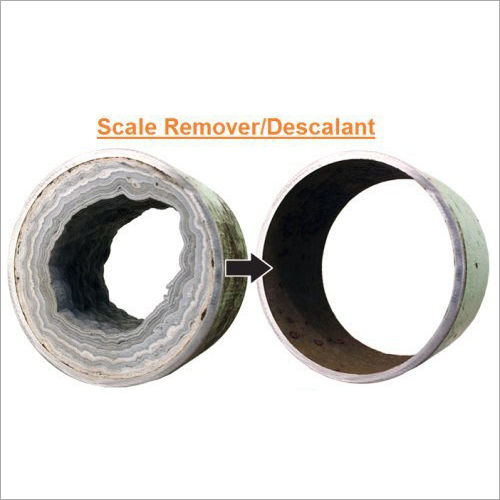
Our Scale Remover is a highly effective solution for preventing and removing water scale in a wide range of industrial applications. It performs particularly well in hard-water conditions, delivering noticeable results within a week and helping prevent recurring scale formation. By reducing scale buildup, it can also minimize the need for certain treatment chemicals, such as cooling tower biocides.
In addition to controlling scale, the Scale Remover helps protect industrial equipment against corrosion, supporting improved system performance, efficiency, and service life.
Efficient Scale Removal
Designed specifically for industrial applications, our Scale Remover penetrates and dissolves stubborn scale deposits, helping restore equipment efficiency and extend operational life. Its highly active formulation provides fast and effective cleaning across a variety of industrial surfaces while leaving minimal residue when properly flushed.
Safe Application and Handling
This liquid chemical cleaner is non-flammable and formulated with corrosion inhibitors to help minimize damage to compatible metal surfaces. Appropriate protective equipment, including gloves and safety goggles, should always be worn during handling. Store the product away from direct sunlight in a cool, dry, and well-ventilated area to maintain its effectiveness and two-year shelf life.
Versatile Industrial Compatibility
The Scale Remover is suitable for a wide range of industrial applications and is compatible with most metals. However, it should not be used on aluminum or zinc, as these materials may react adversely with the acidic formulation. Users should always verify material compatibility before application.
Because the product is classified as hazardous to water environments, it should be handled responsibly and disposed of in accordance with applicable environmental regulations in India and other regions.
FAQs of Scale Remover
Q: How should Scale Remover be applied to industrial equipment?
A: Dilute the Scale Remover according to the thickness of the scale buildup and the size of the system. The solution can then be circulated through or used to soak equipment such as boilers, heat exchangers, and other compatible systems. After cleaning, flush the equipment thoroughly with water to remove dissolved scale and remaining solution.
Q: What safety precautions should be followed when using Scale Remover?
A: Always wear suitable protective gloves and safety goggles to avoid skin and eye contact. Use the product in a well-ventilated area and follow the recommended handling instructions. Do not use it on incompatible materials such as aluminum or zinc.
Q: When is the ideal time to use Scale Remover on industrial systems?
A: Scale Remover is best used during scheduled maintenance or whenever scale buildup begins to affect equipment performance, heat transfer, water flow, or operating efficiency. Regular maintenance can help minimize excessive scale accumulation.
Q: How should Scale Remover be stored?
A: Store the product in HDPE drums in a cool, dry, and well-ventilated location away from direct sunlight and sources of heat. Proper storage helps maintain product stability and effectiveness throughout its two-year shelf life.
Q: What are the key benefits of Scale Remover for industrial cleaning?
A: Scale Remover effectively dissolves stubborn scale deposits, helps improve equipment performance, and supports longer equipment life. Its corrosion-inhibiting formulation also helps minimize damage to compatible metal surfaces. Proper flushing after treatment helps ensure that no significant cleaning residue remains.
Q: Is Scale Remover compatible with all equipment materials?
A: No. The product is compatible with most metals but is not recommended for aluminum or zinc, which may react with the acidic formulation. Always confirm material compatibility before applying the product to unfamiliar or non-standard surfaces.
Q: How should Scale Remover wastewater be disposed of after cleaning?
A: After the cleaning process, thoroughly flush the equipment and ensure that the resulting wastewater is collected, treated, and disposed of in accordance with applicable local environmental regulations. Do not discharge untreated wastewater into drains, soil, or unprotected water sources.






 Send Inquiry


 Send Inquiry


 English
 Spanish
 French
 German
 Italian
 Chinese (Simplified)
 Japanese
 Korean
 Arabic
 Portuguese