Polyelectrolyte Dosing System About
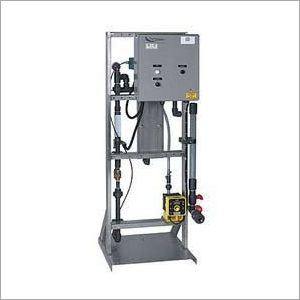
The Polyelectrolyte Dosing System is designed for efficient operation in wastewater treatment plants and various industrial water treatment applications. It helps facilitate the separation and removal of suspended impurities, including organic matter, sludge, turbidity, decaying vegetation, and dirt, improving the overall clarity and quality of treated water.
Engineered for continuous operation, the system can run throughout the day while maintaining consistent dosing performance. It is designed to prevent overloading of clarifiers and deliver reliable results even during challenging conditions such as the rainy season.
By optimizing polyelectrolyte dosing and supporting effective solid-liquid separation, the system can improve the overall performance of water treatment processes. It contributes to higher treatment throughput, improved water quality, and reduced maintenance requirements, making it a practical solution for demanding industrial and wastewater treatment applications.
Technical Specification :
|
Usage/Application
|
Chemical Dosing
|
|
Brand
|
Raybon
|
|
Voltage
|
Standard
|
|
Automation Grade
|
Semi-Automatic
|
|
Material
|
Ss
|
|
Color
|
Any
|
|
I Deal In
|
New Only
|
Advanced Control & Automation
The Polyelectrolyte Dosing System features a digital touch panel with an LCD display for simple, intuitive, and reliable operation. Its PLC-based automation allows users to accurately set, adjust, and monitor dosing parameters, ensuring consistent chemical dosing and improved process control. Integrated sensors and a motor-driven dosing mechanism enable dependable performance while minimizing the need for manual intervention, making the system suitable for demanding industrial applications.
Flexible Operation & Robust Construction
Designed for versatility, the system supports both continuous and batch operation modes, allowing it to adapt to different process requirements. Its floor-mounted or skid-mounted configuration simplifies installation and integration into existing treatment facilities. Constructed from durable SS 304/316 materials, the system is designed to withstand challenging industrial conditions, while IP55 protection provides added resistance against dust and moisture.
High Efficiency & Cost Savings
With a recycle rate of up to 95% and purity levels exceeding 99%, the system promotes efficient chemical utilization and water recovery while helping reduce operating costs and environmental impact. Its low power consumption of approximately 0.52 kW and noise level below 70 dB support energy-efficient and relatively quiet operation. Easy maintenance, quick installation, and automated operation further contribute to improved process efficiency and reduced operating requirements.
FAQs of Polyelectrolyte Dosing System
Q: How does the Polyelectrolyte Dosing System ensure accurate chemical dosing?
A: The system uses PLC-controlled automation and high-accuracy dosing pumps to provide precise chemical dosing. Integrated sensors and automatic operation help maintain a consistent supply of polyelectrolyte for reliable water treatment performance.
Q: What types of chemicals can be used with the dosing system?
A: The system is compatible with both anionic and cationic polyelectrolytes, making it suitable for a variety of wastewater treatment, water treatment, and industrial chemical-processing applications.
Q: When should continuous or batch operation be selected?
A: Continuous mode is ideal for large-scale processes that require uninterrupted chemical dosing, such as industrial wastewater treatment. Batch mode is better suited to intermittent applications where specific quantities of chemicals need to be dosed at predetermined intervals.
Q: Where can the Polyelectrolyte Dosing System be installed?
A: The system can be installed directly on the floor or mounted on a skid, providing flexibility for different industrial layouts. Its compact and robust construction allows for convenient integration with existing treatment systems.
Q: How is the system installed and operated?
A: Installation involves positioning the floor- or skid-mounted unit at the required location, connecting the inlet and outlet through the specified 1"-2" BSP connections, and providing a 220-240V AC electrical supply. Once installed, operating parameters can be configured through the digital touch panel. Automated controls minimize the need for continuous manual intervention.
Q: What are the main benefits of the Polyelectrolyte Dosing System for industrial users?
A: The system provides accurate dosing, efficient chemical utilization, water recovery, low power consumption, reduced noise, and dependable automated operation. These features can help lower chemical wastage and maintenance requirements while improving overall process control and treatment efficiency.
Q: What applications are suitable for this dosing system?
A: The Polyelectrolyte Dosing System is suitable for wastewater treatment plants, Effluent Treatment Plants (ETPs), Sewage Treatment Plants (STPs), and chemical-processing industries. It is designed to provide consistent and reliable polyelectrolyte dosing across a range of industrial treatment processes.







 Send Inquiry


 Send Inquiry


 English
 Spanish
 French
 German
 Italian
 Chinese (Simplified)
 Japanese
 Korean
 Arabic
 Portuguese