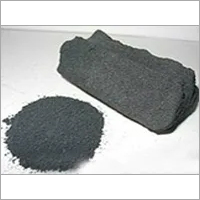
Activated Carbon
Activated Carbon

Activated Carbon

MOQ : 50 Kilograms

Activated Carbon Specification

  • Ash %
  • <5%
  • Chloride (%)
  • <0.10%
  • Floating (%)
  • <2%
  • Shape
  • Granular/Powder
  • Benzene %
  • Not Detected
  • Apparent Density
  • 0.40-0.55 g/ml
  • Sulfide (%)
  • <0.05%
  • Hardness (%)
  • >95%
  • Moisture (%)
  • <=5%
  • Purity(%)
  • 98%
  • Iodine Value
  • 900-1200 mg/g
  • CTC (%)
  • 50-60%
  • CAS No
  • 7440-44-0
  • Other Names
  • Activated Charcoal
  • Type
  • other
  • Usage
  • Other
  • Application
  • Wastewater treatment, Decolorization, Odor removal, Gas purification
  • Form
  • Granular / Powder
  • Appearance
  • Black Granular or Powder
  • Particle Size
  • 8x30 mesh, 12x40 mesh, or as required
  • Surface Area
  • 900-1200 m2/g
  • Magnetic Substances
  • Nil
  • pH Value
  • 6-8
  • Minimum Order Quantity
  • 1000 kg
  • Shelf Life
  • 24 months in sealed condition
  • Pore Volume
  • 0.8-1.1 ml/g
  • Heavy Metals
  • Not Detected
  • Packing
  • 25 kg or 50 kg PP bags, Jumbo Bags
 

Activated Carbon Trade Information

  • Minimum Order Quantity
  • 50 Kilograms
  • Supply Ability
  • 1 Kilograms Per Week
  • Delivery Time
  • 5 Days
 

Activated Carbon About

Premium-Quality Activated Carbon for Industrial Applications
Since 2003, we have been engaged in supplying high-quality Activated Carbon for a wide range of water-treatment, environmental, chemical-processing, and industrial applications. Also known as activated charcoal, Activated Carbon is a specially processed form of carbon containing a highly developed network of microscopic pores.

This porous structure provides a large internal surface area, enabling Activated Carbon to adsorb a wide variety of dissolved contaminants, organic compounds, colour-causing substances, odours, and other unwanted impurities from liquids, gases, and vapours.

Our Activated Carbon is manufactured from carefully selected carbon-rich raw materials and processed under controlled conditions to deliver consistent adsorption performance, mechanical strength, and product quality.

Raw Materials Used for Activated Carbon
Activated Carbon can be manufactured from a variety of carbonaceous raw materials, depending on the required pore structure and application. Common raw materials include:

  • Coconut shell
  • Wood
  • Pine wood
  • Casuarina wood
  • Hardwood and softwood
  • Peat
  • Lignite coal
  • Bituminous coal
  • Olive pits
  • Other specialized carbon-rich materials
The selection of raw material and activation process influences important properties such as pore-size distribution, iodine adsorption value, hardness, ash content, and overall adsorption capacity.

Wide Range of Industrial Applications
Activated Carbon is widely used for both liquid-phase and gas-phase adsorption applications. It can help remove contaminants, colour, odour, organic compounds, and other impurities from various process streams.

Key Applications
  • Drinking and process-water filtration
  • Industrial wastewater treatment
  • Raw-water treatment
  • Decolorization
  • Gold recovery
  • Air and gas filtration
  • Air-conditioning filtration
  • Odour control
  • COD and colour reduction
  • Polishing filtration
  • Chemical processing
  • Pharmaceutical manufacturing
  • Decolorization of bulk drugs and pharmaceutical intermediates
  • Solvent recovery
  • Catalyst and catalyst-support applications
  • Other specialized industrial purification processes
Available Forms
We offer Activated Carbon in different physical forms to suit specific treatment requirements:

Powdered Activated Carbon (PAC)
Powdered Activated Carbon is suitable for applications requiring rapid adsorption and intimate contact with the treatment stream. It is commonly used in water treatment, wastewater treatment, decolorization, and pharmaceutical applications.

Granular Activated Carbon (GAC)
Granular Activated Carbon is commonly used in fixed-bed and column filtration systems. Its particle size and mechanical strength make it suitable for water filtration, polishing applications, gas purification, and continuous treatment systems.

Coconut Shell Activated Carbon

Coconut Shell Activated Carbon is particularly valued for its high micropore content, high hardness, and strong adsorption characteristics. It is widely used in water purification, wastewater treatment, dechlorination, and other applications involving the removal of relatively small organic molecules and contaminants.

Key Advantages of Coconut Shell Activated Carbon
Depending on the specific grade, Coconut Shell Activated Carbon can offer:

  • High mechanical hardness
  • Low dust generation
  • Excellent adsorption capacity
  • High micropore volume
  • High iodine adsorption value
  • Low ash content
  • Good resistance to abrasion
  • Consistent particle size
  • High purity for suitable applications
These characteristics make coconut-shell-based Activated Carbon a preferred choice for many water and wastewater-treatment applications.

Efficient Adsorption Performance
Activated Carbon works primarily through adsorption, in which contaminants are attracted to and retained on the internal surface of the carbon pores. Its effectiveness depends on the carbon's surface area, pore structure, contaminant characteristics, contact time, concentration, pH, temperature, and other operating conditions.

For this reason, the appropriate Activated Carbon grade should be selected according to the specific treatment objective rather than based on a single specification such as iodine value alone.

Consistent Quality and Reliable Performance
Our Activated Carbon is manufactured and supplied to meet industrial application requirements. Depending on the selected grade, products can offer a high surface area, strong mechanical hardness, controlled ash content, and high adsorption capacity.

Typical specifications may include:

  • Surface area: up to approximately 900-1,200 m2/g, depending on grade
  • Iodine adsorption value: approximately 900-1,200 mg/g, depending on grade
  • Ash content: typically 5% or lower for selected grades
  • High mechanical strength and abrasion resistance
Actual specifications can vary according to the raw material, activation method, particle size, and intended application.

Safe Handling and Storage
Activated Carbon should be handled carefully to minimize exposure to airborne carbon dust. Suitable protective equipment, including gloves, protective eyewear, and appropriate respiratory protection where required, should be used according to workplace safety procedures and the product's Safety Data Sheet (SDS).

Store Activated Carbon in sealed original packaging or suitable containers in a cool, dry, and well-ventilated location. Protect the product from moisture, contamination, and sources of ignition.

Frequently Asked Questions (FAQs) About Activated Carbon

Q1. What is Activated Carbon and how does it work?

Activated Carbon is a specially processed carbon material with a highly porous internal structure and large surface area. It removes contaminants primarily through adsorption, allowing dissolved organic compounds, colour-causing substances, odours, and other impurities to attach to its internal surfaces.

Q2. How is Activated Carbon used for water and air purification?
Activated Carbon can be incorporated into filter beds, adsorption columns, treatment tanks, or other filtration systems, depending on the application.

Granular Activated Carbon is commonly used in fixed-bed filters and columns, while Powdered Activated Carbon can be dosed directly into treatment systems where rapid adsorption is required.

The appropriate form, particle size, dosage, and contact time depend on the contaminants being treated and the system design.

Q3. What are the main benefits of Activated Carbon for industrial applications?
Activated Carbon provides efficient adsorption of a broad range of contaminants. Depending on the selected grade and application, it can help reduce organic pollutants, colour, odour, chlorine, and other unwanted substances.

Its high surface area and developed pore structure make it particularly useful for water purification, wastewater treatment, decolorization, air purification, and industrial process treatment.

Q4. What is the difference between Powdered and Granular Activated Carbon?
Powdered Activated Carbon (PAC) consists of fine particles and is generally used where rapid adsorption and direct dosing into a treatment process are required.

Granular Activated Carbon (GAC) has larger particles and is commonly used in fixed-bed filters and adsorption columns where the carbon remains in the treatment system for an extended period.

The appropriate form depends on the treatment process, equipment, contaminant characteristics, and required contact time.

Q5. What is Coconut Shell Activated Carbon used for?
Coconut Shell Activated Carbon generally has a highly microporous structure and good mechanical hardness. It is commonly used in drinking-water treatment, process-water purification, wastewater treatment, dechlorination, and other applications requiring adsorption of relatively small molecules.

Q6. What does the iodine value indicate?
The iodine value is commonly used as an indicator of the carbon's adsorption capacity for certain relatively small molecules and provides useful information about its microporosity. A higher iodine value generally indicates a greater developed micropore structure, but it does not by itself determine performance for every contaminant or application.

Other factors, including pore-size distribution, surface chemistry, contaminant characteristics, and operating conditions, should also be considered.

Q7. When should Activated Carbon be replaced?
Activated Carbon should generally be replaced or regenerated when its adsorption capacity has been sufficiently exhausted and the required treatment performance can no longer be maintained.

Replacement timing depends on contaminant concentration, loading, flow rate, contact time, carbon grade, and treatment objectives. Monitoring treated-water or treated-gas quality is a more reliable indicator than relying solely on a fixed time period.

Q8. Where can Activated Carbon be used?

Activated Carbon is used in a wide range of industries and facilities, including:

  • Municipal water-treatment plants
  • Industrial wastewater-treatment plants
  • Drinking-water facilities
  • Chemical-processing plants
  • Pharmaceutical industries
  • Food and beverage processing
  • Mining and gold-recovery operations
  • Textile industries
  • Air-purification systems
  • Gas-treatment systems
  • Industrial process-water systems
Q9. Can Activated Carbon be used for COD and colour removal?
Yes. Activated Carbon can be used to reduce certain organic compounds, colour, and residual COD in wastewater, depending on the nature of the contaminants.

It may be applied in aeration-tank treatment systems or as a polishing medium in downstream filtration systems. The effectiveness should be confirmed through application-specific testing because not all forms of COD are equally adsorbable.

Q10. Is Activated Carbon suitable for pharmaceutical applications?
Selected grades of Activated Carbon can be used as decolorizing and purification agents for pharmaceutical intermediates and bulk drugs. For sensitive pharmaceutical applications, the carbon grade should be selected according to the required purity, ash content, extractables, particle characteristics, and applicable regulatory or customer specifications.

Q11. How should Activated Carbon be stored?
Store Activated Carbon in its original sealed packaging or suitable closed containers in a cool, dry, and well-ventilated area. Protect it from moisture, contamination, excessive heat, and ignition sources.

Proper storage helps preserve the carbon's physical properties and adsorption performance.

Q12. What factors should be considered when selecting Activated Carbon?
Selection should consider:

  • Raw material
  • Activation method
  • Surface area
  • Pore-size distribution
  • Iodine adsorption value
  • Ash content
  • Hardness
  • Particle size
  • Moisture content
  • Target contaminant
  • Required contact time
  • Treatment-system design
A suitable grade should be selected based on the specific contaminant and treatment objective, rather than relying on a single specification.

Why Choose Our Activated Carbon?

With extensive experience in supplying Activated Carbon since 2003, we provide solutions for diverse water, wastewater, air, chemical, pharmaceutical, mining, and industrial purification applications.

Our range of Powdered Activated Carbon, Granular Activated Carbon, and Coconut Shell Activated Carbon offers flexibility for different adsorption and filtration requirements. With consistent quality, competitive pricing, and application-focused product selection, we aim to provide reliable Activated Carbon solutions for both domestic and international industrial customers.
Tell us about your requirement
product

Price:

Quantity
Select Unit

  • 50
  • 100
  • 200
  • 250
  • 500
  • 1000+
Additional detail
Mobile number

Email

More Products in Activated Carbon Category

Activated Carbon Powder

Activated Carbon Powder

Price Range 50.00 - 200.00 INR / Kilograms

Minimum Order Quantity : 50 Kilograms

Shape : Powder

Appearance : Fine black powder

Chloride (%) : 0.1%

Floating (%) : 2%



Back to top